Getting to Know Max Sornik, LMSW

Welcome to “Getting to Know Us,” a series introducing the programs and practitioners of Smart Practice Network(SPN). SPN is a network of independent clinicians, teachers and mentors whose collaboration supports the needs of gifted individuals, including those who are twice exceptional.
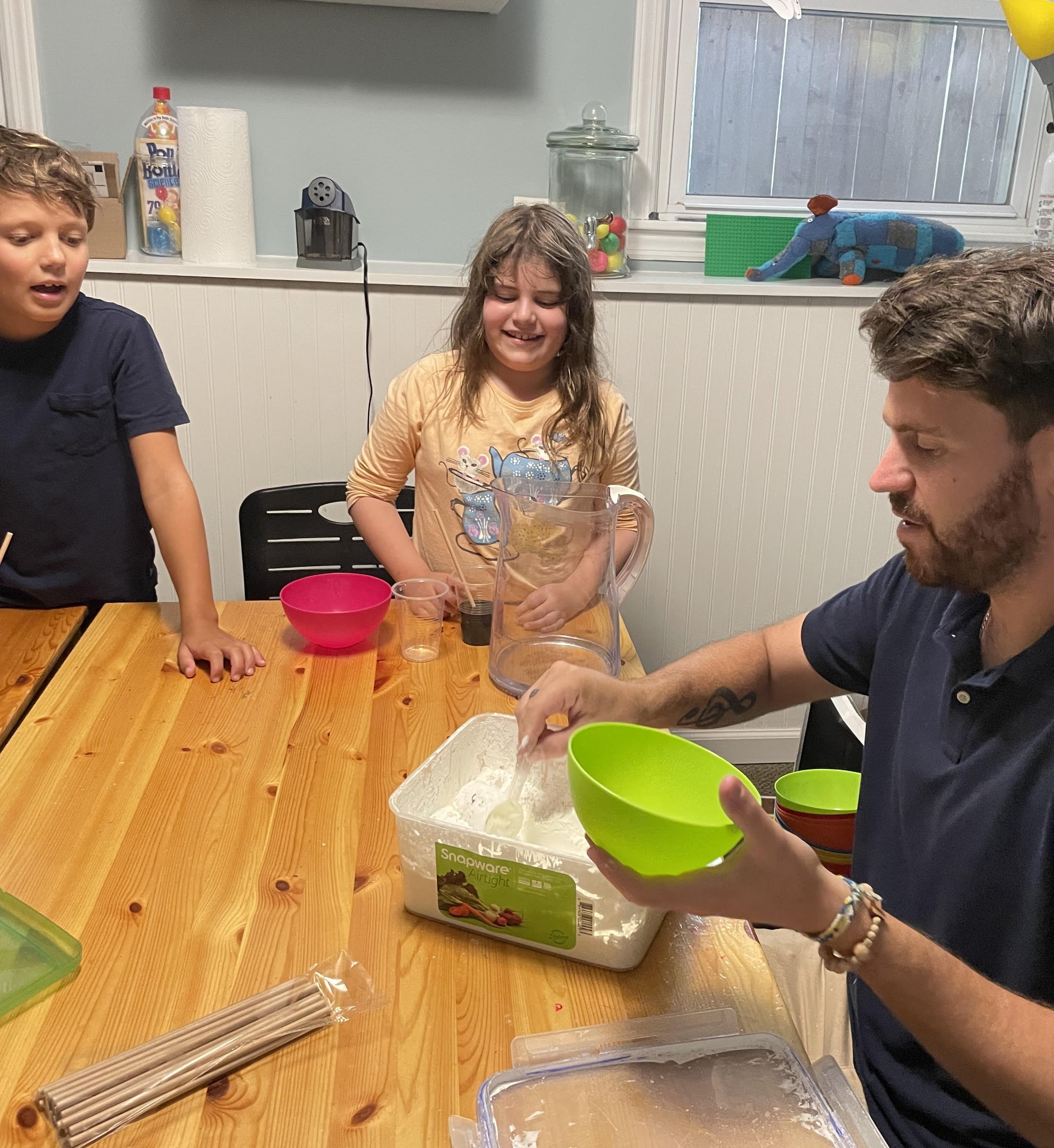
This month's spotlight is on Max Sornik, LMSW. Max brings years of experience as a mentor and counselor in the practice to his work with clients, as well as the unique perspective of an adult who knows and understands firsthand what it means to grow up gifted with a diagnosis of ADHD. Max provides individual and group therapy in the practice’s New York City and Sea Cliff locations. At Talent Development Connection, he facilitates the Collaborative Creativity Lab and other programs. He is also a school social worker at Flex School, a private school for 2e teens in Bronxville, New York.
Q: You've been a provider at the practice for a long time with many roles, what keeps you motivated to work with the 2e, gifted, ADHD population?
Max: What motivates me is how much fun it is to work with 2e kids. There’s so much going on in their minds at any given moment, and I find it highly satisfying to help them slow things down and make sense of it all. Conversations move quickly and keep me on my toes in the best way possible. It’s a challenge that forces me to stay present, flexible, and engaged. Helping a child work toward that ah-ha moment, or helping a parent to understand their child more clearly is easily the most affirming part of what I do.
Q: There can be a lot of trepidation for parents when their child is diagnosed with ADHD. Can you share some positive aspects of having an ADHD brain?
Max: Kids with ADHD can be incredibly creative, intuitive, and sensitive. They often bring creative new perspectives to seeing the world and problem-solving. Many of them also have a ton of energy. That can be confusing or overwhelming for them, their friends, and family. Once they start learning to channel that energy, it can actually become one of their biggest strengths. With proper support and guidance, many kids with ADHD find their unique way to focus, self-motivate, and produce. ADHD is just a label, and every child is unique. What we work toward in practice is understanding the individual and the unique way their brain works, so we can support them with an understanding that truly helps them succeed.
“Helping a child work toward that ah-ha moment, or helping a parent to understand their child more clearly is easily the most affirming part of what I do.”
Q: Talk about how your experience as a person with ADHD gives you insight when working with other folks with ADHD?
Max: Having ADHD myself gives me the understanding of what kids feel and deal with day to day. There are parts of ADHD that are easy to miss when viewing it from the outside, especially when children learn how to mask the symptoms. This can present as a child who holds it together all day at school and blows up the second they get home. There is a quiet exhaustion and internal frustration that comes from holding it together, white-knuckling it through the day. Most 2e kids, especially those with ADHD, don't have the patience for traditional talk therapy. In fact, many kids feel intellectually mismatched or even patronized by their therapists. Through these trials, I built mental muscle and a personal skills toolbox. I have a distinct perspective and ability to talk about things in a way that feels real, lived, and non-judgmental. Kids can sense when they are sincerely understood, and parents often tell me that this common understanding leads to the first time their child has actually felt safe to open up.
Q: If you could give your younger self advice about living with ADHD, what would you say?
Max: If I could give my younger self advice, I’d say this: “You aren’t broken, and you aren’t lazy. You just have a different kind of brain, and that’s okay. It means you have to treat your willpower as a muscle that needs training.” For me, learning how to build that muscle was the key, and that’s not easy for kids with ADHD. For us, willpower doesn’t always show up on its own, and it gets tired quickly. That’s why the first step is figuring out where we get stuck and putting the right skills and supports in place for those moments. That can be the turning point, not pushing harder but working smarter so all the effort leads to positive change.
Q: If your younger self could give some advice to parents, what would that be?
Max: For parents, one of the most important things is helping your child to be understood, believed, and supported. Emotions may run high in a household with an ADHD child, and that’s normal. Instead of jumping straight into fixing behaviors or solving the problem in the moment, it often helps to slow down and understand what’s driving the challenge. Sometimes that conversation just can’t happen right away, and that's okay! Pause, and give kids space to feel what they’re feeling and sort it out. Coming back to the conversation once emotions have settled usually leads to a much better outcome for everyone. From there, you can address the situation with care and an open mind, and work together to determine the best way forward. Your child doesn’t need constant guidance navigating; they need patience, understanding, and to know that it's allowed to feel their emotions first and work through them after.
“For parents, one of the most important things is helping your child to be understood, believed, and supported.”
Q: In your experience, how can families benefit most from the therapeutic relationship?
Max: Families tend to get the most out of therapy when it feels like a shared process rather than a place to send a problem to be fixed. Often, kids communicate important things by behavior because they don’t yet have the words or skills to say them clearly. Part of my role is helping make sense of those signals and slowing things down so everyone can understand what’s really going on. I also work with kids on how to express themselves more effectively at home, while helping parents hear the message beneath their child’s reactions. When therapy is consistent and built on trust, it can deliver clarity, reduce power struggles, and establish a sense that the family is working together instead of against each other.